Theatre Superstitions: The Ultimate Guide for Parents of Children in Theatre
If you’ve got a child in theatre, also known as a thespian, you’ve probably been yelled at for unwittingly breaking a superstition. Like whistling in the theatre - I remember the first time my theatre kid found out about that one! She had heard about it being a superstition but hadn’t given it much weight until she ended up sick during a run. In her mind, that one event was the trigger, “If [so-and-so] hadn’t whistled backstage, I wouldn’t be sick now!” I laughed pretty hard at that one and I thought initially that it’s just kids feeding on one-another, but as I dug in on this one I started to realize the theatre community can be a pretty superstitious bunch - adults and kids. So, I read up on a few of the more common ones for my own knowledge so I wouldn’t inadvertently curse a show or something crazy.
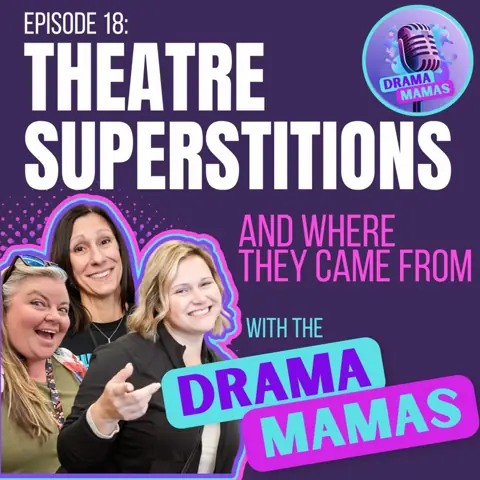
In preparation for Episode 18 of our Drama Mamas Podcast, I decided to do a little digging and found a bunch more so I thought I’d go ahead and create a guide for our website that compliments this episode for those of you interested in learning more about theatre superstitions too. In this guide, we'll explore the most common theatre superstitions and offer some tips on how to navigate them as a parent of a young performer.
The Basics of Theatre Superstitions
Superstitions are beliefs or practices that are based on irrational or unfounded fears, often related to luck or fate. In the theatre world, superstitions are an integral part of the culture and have been passed down through generations of performers and theatre practitioners. Superstitions serve to create a sense of community and respect for the craft, and to ensure that performances run smoothly without any unexpected mishaps.
Theatre superstitions date back to the time of the ancient Greeks and Romans, who thought that the gods and goddesses had the ability to affect human events. Ancient playwrights and actors frequently made sacrifices to the gods to ensure the success of their productions. Several of these notions and routines developed into the superstitions we see in theater today throughout time.
As a parent of a thespian, it's important to respect superstitions in theatre because these traditions are an integral part of the theatre community and can play a significant role in the success of a production. Many actors, directors, and stage crew members hold these superstitions in high regard, and going against them can cause tension or conflict within the theatre community.
Additionally, many superstitions in theatre have been passed down for generations and are deeply ingrained in theatre culture. Ignoring or disrespecting these traditions can be seen as disrespectful or even insulting to those who hold them dear. Respecting superstitions in theatre can also help to create a positive and supportive environment for the actors and crew. Following these traditions can help to build a sense of camaraderie and mutual respect among everyone involved in the production, which can ultimately lead to a more successful and memorable performance.
Common Theatre Superstitions - Their Meanings and Origins
There are many different theatre superstitions, each with their own unique meaning and origin. Here are some of the most common ones you're likely to encounter:
"Break a leg":
This is perhaps the most well-known theatre superstition. It's considered bad luck to wish someone "good luck" before a performance because it’s thought that saying "good luck" is seen as tempting fate and could actually bring bad luck to the performance. Many people in theatre believe that the mischief-making spirits of the stage will force the opposite of what you wish to happen. Instead, we say "break a leg".
There are a few different theories about the origins of this phrase. Some say it comes from the idea of "breaking the line" of the leg, which refers to stepping out of the wings and onto the stage. Others say it's related to the idea of a bow, with the leg being the first thing to bend. Whatever the origin, saying "break a leg" is a way to wish someone luck without actually saying the words. Or, for performers who work with feathered costumes may say "break a feather" instead of "break a leg" to wish them good luck.
Ghost Light:
A ghost light is a single light bulb on a post that’s left on in the middle of the stage in an empty theatre overnight. The tradition dates back to the days of gas lighting, when theatres were lit by open flames and to prevent fires a single light was left burning overnight. It’s also believed to appease the ghosts living in the theatre so they would have light to perform during the evening. This tradition is still observed as a safety measure too and, in fact, Actor’s Equity, the acting union, requires that there be some light onstage at all times to avoid injury due to dark and crowded backstage areas.
No Whistling:
(or humming)
It's considered bad luck to whistle on or off stage. In researching this one I also read that humming off stage was also bad luck! The superstition specifically about no whistling in theatre is believed to have its roots in the days of sailing, when whistling was used to signal different tasks. Years ago, theatres hired off-duty sailors to run the fly loft - because of their expertise with knots and raising and lowering sails - and they often communicated by whistling. So, a whistling actor or guest could accidentally start a scene change early or injure actors onstage from unplanned incoming scenery. Theatres today communicate with headsets and/or cue lights to initiate changes to set and scenery, but this superstition persists.
There is another theory behind the existence of this superstition, though, and might be why this superstition is still around. It’s also believed that whistling or humming can distract or confuse the ghosts that are said to haunt many theatres. In some traditions, it's believed that the ghosts are friendly and may even help with the production, but they can be easily offended or frightened. Whistling or humming may be seen as a potential insult to the ghosts or a sign of disrespect. Yet another theory is that whistling or humming can disrupt the concentration of the actors and crew. In the high-pressure environment of a live performance, even a small distraction can be enough to cause a mistake or accident. Regardless, in the theatre world whistling can be seen as a signal for disaster and is one of the most prevalent superstitions you’ll find in most theatres today.
Saying MacBeth:
Saying the name of the play "Macbeth" inside a theatre is considered bad luck, and the play is often referred to as "the Scottish play" or "MacBee." There are several theories as to why it’s considered bad luck. One popular theory is that the play's portrayal of witches and dark magic was too accurate using real incantations that led ‘real witches’ to curse the production, while another theory suggests that accidents and mishaps during early productions of the play led to its reputation as a cursed work. Whatever the origin of the superstition, many theatre professionals take it very seriously and avoid speaking the name of the play altogether.
If someone accidentally says "Macbeth" you can do a couple things to counteract the bad luck. One way is to leave the theatre and spit and turn around three times then knock to be let back into the theatre. You can also recite a line from another Shakespearean play like "If we shadows have offended" from A Midsummer Night's Dream.
Bowing to an Empty House:
Bowing to an empty house, meaning there is no audience present, is considered bad luck in theatre. This superstition likely stems from the belief that bowing to an empty house symbolizes a lack of appreciation and respect for the theatre and its traditions. Additionally, it may be seen as tempting fate and inviting bad luck, as it implies that there will not be an audience present for future performances. It is customary for actors to bow only when there is an audience present to show their appreciation for the performance. To prevent bowing to an empty house, many productions only stage bows at the last possible moment in a production - often waiting until the last dress rehearsal to set the order and placement of actor bows.
a Bad Dress Rehearsal means the show will be a hit:
The idea that a bad dress rehearsal means the show will be a hit is another theatre superstition that has been around for a long time. According to this superstition, if the dress rehearsal, which is the final rehearsal before the actual performance, goes badly, then the actual show will be a great success.
The reasoning behind this superstition is not entirely clear, but there are several theories. One theory is that a bad dress rehearsal may be seen as a kind of rehearsal jinx, where all the mistakes and mishaps that can happen in the show occur during the rehearsal, leaving the actual performance to go smoothly.
Another theory is that a bad dress rehearsal may be a wake-up call for the performers and crew to take the performance more seriously and work even harder to ensure a successful show. Regardless, it’s a great way to alleviate some of the anxiety and pressure associated with a live performance, and to encourage performers to stay focused and work hard to deliver their best on stage.
One for the Road:
It's considered bad luck to perform a final dress rehearsal without an audience. A few invited guests may attend the final dress rehearsal, and it's often referred to as "one for the road."
More Superstitions in Theatre
[and some less common ones too]
No peacock feathers at theatre:
It's considered bad luck to have peacock feathers on stage or in a dressing room. This superstition is rooted in the belief that peacock feathers resemble the "evil eye," a curse or hex that can cause bad luck or harm. In some cultures, the "evil eye" is believed to be a real curse that can be cast on someone by envy or jealousy.
No Real Weapons on Stage:
It's considered bad luck to use real weapons on stage. This superstition dates back to ancient times, when it was believed that using real weapons would invite violence and bloodshed. Today, stage weapons are made from safe materials like rubber and plastic to prevent accidents and injuries.
Opening Night Flowers/Gifts:
It's customary to give performers flowers on opening night, but did you know that it's bad luck to give them before the show? Instead, wait until after the performance is over to give flowers to the cast. This superstition, along with giving gifts on opening night, dates back to the days when theatre troupes were traveling and money was tight. Giving gifts on opening night was seen as a waste of resources, and also as tempting fate by celebrating too soon. Today, some theatre companies still adhere to this superstition and wait until the end of the run to give gifts to the cast and crew.
No Real Money or JEwelry:
This superstition has its roots in the belief that any real items of value on stage could be distracting to the performers and could potentially be stolen or lost. Real money and jewelry may also be seen as tempting fate and inviting bad luck or theft, as they could be seen as a tempting target for would-be thieves. Additionally, real money and jewelry can be noisy or reflective, which could draw attention away from the performance and break the illusion of the play. To avoid this potential bad luck, it is common for theatre productions to use prop money or fake jewelry instead of real items. These prop items are designed to look realistic from a distance, but are not valuable or distracting to the performers. This allows the actors and crew to focus on their performance without worrying about the potential for theft or distraction.
Don't cross your legs:
Crossing your legs in a theatre is considered bad luck, as it's believed to "cross out" the actors on stage. Encourage your child to sit with their feet flat on the ground to avoid any potential bad luck.
Knock on Wood:
This is a well-known superstition outside of the theatre world, but it's also practiced on stage. If someone mentions something that could potentially go wrong, it's customary to knock on wood to prevent any bad luck from occurring.
The last line of a play:
Many theatre professionals believe that the last line of a play is especially important. It's considered bad luck to change the final line, even if it's just for a rehearsal.
No looking back:
It's considered bad luck to look back while on stage, as this may invite the spirits of past performers to interfere with the performance. Similarly, tripping over a threshold is considered bad luck, as it may invite bad luck into the theatre.
Don't set your hat on a bed:
It's considered bad luck to place a hat on a bed, whether it's a costume hat or a personal one. The origins of this superstition are unclear, but it is believed to have originated in the United States during the 19th century. Some believe that the superstition may have its roots in the belief that hats are personal items that are intimately connected to the identity and energy of their wearer. Setting a hat on a bed, which is a place associated with rest and recuperation, is seen as a sign of disrespect to the hat and its owner. It is also thought to invite bad luck, illness, or even death. In theatre, this superstition is observed as a sign of respect for the art and the performers. Hats are often worn as part of a costume or a character, and they are seen as a crucial part of the overall performance. Setting a hat on a bed is considered to be a breach of this respect and may bring bad luck to the production or to the individual performer.
No mirrors on stage:
It's considered bad luck to have a mirror on stage. One theory about why this is so is that mirrors were once very expensive and fragile, so having one on stage was a distraction and a potential source of danger for actors. In addition, mirrors can reflect light in a way that may interfere with the lighting design of the production. Another theory is that mirrors have historically been associated with the supernatural and the idea that they can reflect and trap the souls of the living. In the theatre, where performers often play characters who are not themselves, having a mirror on stage could be seen as inviting the supernatural and the blending of the character and the performer's souls. Some also believe that the superstition may have evolved from the idea that looking at oneself in a mirror can bring bad luck or misfortune, as it is thought to invite the evil eye or other negative energy. Regardless of the origin, the superstition is still widely observed in theatre today, and many productions take care to avoid having mirrors on stage.
No turning your prop upside down:
Some believe that turning a prop upside down is considered bad luck, as it may cause the performance to go "upside down." There is another superstition of “no knitting on stage” that is similar to this idea where doing that action will cause the performance to go badly.
Colors in Theatre:
- Green: It is believed that wearing or using the color green on stage is bad luck because it has been associated with the supernatural, envy, and the devil. In medieval times, green was believed to be the favorite color of evil spirits and witches, and it was thought to be an unlucky color that could bring misfortune to anyone who wore it. Additionally, some actors and crew members believe that wearing green on stage can cause the set to disappear or make the actor blend into the background, so it is avoided in many productions.
- Blue: In some cultures, blue is considered an unlucky color because it is associated with death and mourning. In addition, it is believed that wearing blue on stage can make the actor appear pale or sickly under certain lighting conditions, so it is often avoided.
- Yellow: Yellow is believed to be a bad luck color in theatre because it has been associated with death and the devil. In some cultures, yellow is the color of mourning and it is believed to represent the decay of the body. Additionally, yellow is a difficult color to light properly on stage, and it can make the actors appear washed out or sickly.
- Red: While red is often associated with passion and excitement, it is also considered a bad luck color in theatre. In the past, red was the color of blood and violence, and it was thought to bring bad luck to productions that featured violent or tragic scenes. Additionally, red is a difficult color to light properly on stage, and it can create harsh shadows and make the actors appear washed out or distorted.
CAlling the backstage area a "Green Room":
This one was a surprise for me because our home-base community theatre actually calls one of it’s backstage areas a ‘green room’. Apparently, some people believe that calling it the "green room" brings bad luck because it reminds actors of the nerves they feel before going on stage.
No eating or drinking onstage:
Again, this one was news to me because I’ve been in a production of Elf where buddy eats on stage and my daughter was recently in a production of Rudolph Jr. where Santa ate cookies. But apparently it's considered bad luck to eat or drink on stage, as this could lead to accidents or mishaps during the performance. I think I could see that - depending on what it is… but I don’t think this one’s really adhered to as a ‘superstition’.
Tips for Avoiding Bad Luck in the Theatre
While some theatre superstitions may seem silly or superstitious, many are still taken seriously by performers and theatre professionals. If you’re a parent of a junior thespian, here’s a few tips to help you avoid cursing your child’s performances:
Always say "break a leg":
As mentioned earlier, it's considered bad luck to say "good luck" before a performance. Instead, we say "break a leg", “break legs”, or even “break a feather” to the performers.
Don't whistle in the theatre:
Whistling is a major no-no in the theatre world. Even when the songs are catchy, remember it’s bad to whistle in the theatre. And remind your child not to whistle on or off stage, and to be aware of others who may be doing so.
Avoid giving flowers/gifts before the opening night performance is done:
Wait to give your junior thespians their flowers, and it’s best to wait until the end of the run to give gifts to the cast and crew.
Respect the ghost light:
The ghost light is an important safety measure in the theatre. Encourage your child to never touch or tamper with the light, and to respect its importance as a tradition in the theatre world.
Never say "Macbeth":
Saying the play name "Macbeth" is considered cursed in the theatre world, and saying it is believed to invite bad luck. If it comes up in conversation, just use alternative phrases like "the Scottish play" to describe the play rather than saying its name. If it happens, though, don’t panic - just perform your cleansing ritual!
Superstitions have been a part of the theatre world for centuries, and although many of them may seem irrational, they continue to be respected and upheld by those who work in the theatre. As a parent of a child who is passionate about the performing arts, it is important to understand and respect these superstitions. Doing so can help your child feel more at ease and confident when they are performing, knowing that they are adhering to the traditions of the theatre.
By providing your child with guidance on how to navigate theatre superstitions, you can help them develop a deeper understanding and appreciation for the art form. Whether it's advising them to avoid saying "good luck" or reminding them to keep their feet on the ground, your support and guidance can help your child avoid any unnecessary bad luck and feel more comfortable on stage.
Ultimately, this ultimate guide to theatre superstitions offers valuable information that can help you as a parent support your child's passion for the performing arts. By being aware of the most common theatre superstitions and understanding why they are important, you can help your child feel more confident and prepared for their performances, and make their experience in the theatre more enjoyable and fulfilling.
Kristen